

When a long-term customer walks into your shop, does your team actually know who they are?
Do they know what is sitting in that customer's online cart or which products they were browsing last night? If the answer is no, your technology isn’t helping you, it’s isolating you.
Too often, store managers and digital teams operate on parallel tracks. However, success does not come from managing separate channels. It comes from erasing the boundaries between them.
Shopify is not just software for building websites. It is the operating system for modern commerce, connecting inventory, social media, marketplaces, and physical stores into a single flow.
While competitors waste budgets and lose sleep just 'keeping the lights on' with glitchy servers, merchants choosing unified commerce dominate the market through fluid data and lean operations.
In this guide, we explore how the Shopify architecture kills off technical debt, handles UK and international tax compliance, and transforms logistics into a growth engine.
Why Shopify Beats Legacy eCommerce Platforms
Choosing Shopify is not like renting an empty office you have to furnish yourself. It is like moving into a luxury skyscraper where the concierge, gym, and security are already included in your rent.
You never worry about maintenance or security, yet you keep total freedom to customise your space.
1. Eliminating Technical Debt
Traditional systems force you to act as the plumber and electrician of your own platform. Shopify gives you the keys to a SaaS (Software as a Service) ecosystem that evolves on its own.
In old architecture, every Black Friday is a crash risk. Every update becomes a massive construction site that halts sales.
With Shopify, 99.99% stability and scalability are built-in features. Your focus finally shifts from maintenance to growth.
Read more in our article about enterprise migration and the hidden costs slowing your sales.
2. Global Commerce Infrastructure
Shopify used to be for small brands, but today it is a global powerhouse designed for high-volume Enterprise brands across B2B and B2C. Your catalogue, orders, and inventory stay aligned worldwide, ensuring a consistent customer experience.
3. Growth Tools for the AI Era
Integrating native sales on TikTok or offering AI-driven conversational checkout might feel like the future, but Shopify makes it the present.
Shopify solves this paradox with tools that simply make growth simple.
You can use Shopify Flow to automate complex marketing tasks or tap into AI with Shopify Magic. If you’re looking to go global, Shopify Markets acts as your passport. It handles languages, currencies, and customs duties in every country without you having to rebuild your setup from scratch.
Beyond the Receipt: Data Continuity
The real power of unified commerce appears when the digital experience blends with the physical shop floor. Forget rigid, isolated till systems.
When a customer reaches the checkout, Shopify POS instantly recognises their profile if they have shopped with you before.
Your staff can see their order history, preferences, and loyalty points. This transforms an anonymous transaction into a personal relationship.
This data then fuels your automation. You can trigger thank-you emails, offer discounts on their next online purchase, or segment customers based on their real-world behaviour.
Want to dive deeper into these marketing automations? Read our article eCommerce Marketing Automation to drive sales and customer loyalty!

Global Brands: Scalability in Action
When a brand chooses Shopify, they adopt an infrastructure that meets customers wherever they are.
- Fashion & Lifestyle: Brands like SKIMS and Gymshark use Shopify to manage high-traffic launches and immersive brand experiences.
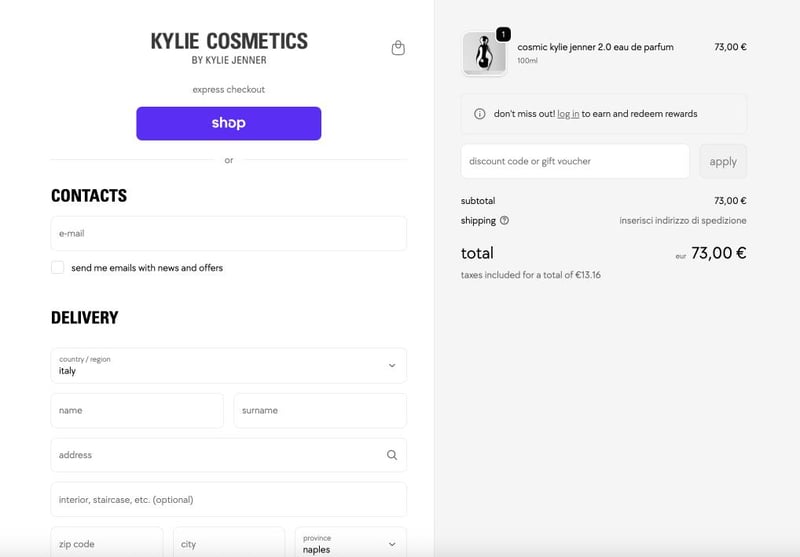
- Beauty & Skincare: Continuity is king. Kylie Cosmetics, Fenty Beauty and Glossier use Shopify Subscriptions and Shopify Flow to manage renewals and loyalty without increasing operational workload.
- Food & Beverage: Logistics is the main operational hurdle. Heinz, Stumptown Coffee Roaster and Death Wish Coffee rely on Shopify to keep inventory and local pickups perfectly synced.
Read our article to maximise customer retention and understand why your loyalty program isn't working at the checkout.
Shopify vs The Alternatives: The Reality Check
When comparing Shopify to WooCommerce or Magento, look at the entire sales experience, not just individual features.
| Focus | Shopify | WooCommerce | Adobe Commerce (Magento) | Wix |
| Model | Unified Commerce native | added eCommerce | Complex eCommerce | Base |
| Technical Management | Managed and Cloud | Self-hosted (High responsibility) | Self-hosted (Highest complexity) | Managed |
| Scalability | Unlimited | Limited by server | Unlimited but expensive | Very limited |
| POS & Omnichannel | Native | Requires plugins | Complex integrations | Limited |
| Total Cost (TCO) | Predictable | High (technical hours) | High (technical hours) | Low (but limited) |
Our comparison table highlights a clear divide. Traditional platforms force brands to act like IT contractors, whereas Shopify provides a complete architecture where scalability and omnichannel sales are built-in.
It’s this deep integration that turns a basic eCommerce site into a proper operational command centre. This shift unlocks a predictable TCO (Total Cost of Ownership) and allows you to focus entirely on growth.
An Ecosystem Designed to Simplify Complexity
The true potential of this architecture lies in how it natively integrates critical components. This eliminates the need for fragile or expensive third-party workarounds:
- Payments. With Shopify Payments, you can accept credit cards, Apple Pay, and Google Pay right away. There’s no need for external gateways.
- Unified Channels. A customer can buy online and return their item in-store. Your inventory stays synced in real-time across every touchpoint.
- Shopify Functions. You can create custom discount rules and dynamic shipping methods without making your core code fragile.
- Constant Innovation. Shopify releases hundreds of new features automatically every six months through their "Shopify Editions" updates.
Marketplace Integration and Ending Fragmentation
Today’s merchants don't sell on just one channel.
Customers discover products on TikTok, check reviews on Amazon, and buy on your official store.
With Shopify, you have one command centre. If you sell the last item on Amazon, your online store updates instantly.
This eliminates manual updates and the risk of overselling.
Connecting Your Business Intelligence
Shopify acts as the convergence point where information stops being "siloed". Through robust APIs, the platform talks to your critical systems:
- CRM & Marketing: Connect HubSpot or Klaviyo to turn clicks into relationships.
- ERP & Logistics: Ensure orders flow smoothly from checkout to delivery.
- Customer Service: Centralise all requests so your team gives informed, consistent answers.
Towards Agentic Commerce: The Future is Already Here
Every interaction, whether it’s a site visit, an in-store purchase, or a quick chat with support, builds a single, clear view of your customer. You’ll no longer have to deal with scattered data. Instead, you get a complete history that lets your team understand real-world behaviour. This means you can make decisions based on hard facts, not just gut feelings.
If your team is already looking ahead, Shopify is ready for Agentic Commerce (AI-driven trade). With new AI discovery themes, the platform does more than just display products; it actively helps customers find exactly what they need. It optimises the sales experience intelligently and predictively, all within a natural conversation powered by AI.
Read more here AI & Unified Commerce!
What Does Shopify Really Cost?
Unlike self-hosted platforms where hosting, security, and updates are separate, unpredictable costs, Shopify uses a SaaS model with transparent pricing.
Typically, your budget will rest on three pillars: your subscription, transaction fees, and hardware. While we can tailor a detailed quote to your specific needs, here is a general overview of what to expect.
1. Subscription Plans
These plans are designed to scale alongside your business:
- Basic Shopify (€36/month): Perfect for those just starting out. It includes the world’s fastest checkout and 10 staff accounts.
- Shopify (€105/month): The ideal mid-tier plan for growing businesses, offering advanced reporting and lower transaction fees.
- Advanced Shopify (€384/month): If you’re a global brand, this plan includes automatic customs duties calculation and custom reports.
- Shopify Plus (from €2,300/month): The enterprise-grade solution for high-volume merchants. It features full automation via Shopify Flow, multi-store management, and dedicated support.
2. Shopify Payments and Fees
This is the financial heart of your store.
By using Shopify Payments, the platform's native gateway, you won’t pay any additional transaction fees to Shopify on your sales. You only pay the standard credit card processing rate.
- Financial Advantage: The higher your plan, the lower the percentage you pay on each transaction. Shopify Plus offers extremely competitive rates.
- Flexibility: If you choose an external gateway like PayPal or Stripe, Shopify applies a small variable fee (from 2% down to 0.2% depending on your plan) to maintain the checkout infrastructure.
3. Shopify POS: Your Bridge to Physical Retail
In-store selling requires specific integration, which Shopify handles in two ways:
- POS Lite (Included): Free on all plans and perfect for pop-ups or occasional sales. It manages payments, inventory, and basic customer profiles.
- POS Pro (approx. €79-89 per location): Essential for established bricks-and-mortar shops. It includes advanced stock management (like "Buy Online, Pick Up In-Store"), staff management, and detailed analytics for every location.
- Hardware: Investment in hardware (card readers, fiscal printers, or tablets) is a one-off cost. This ensures you’re fully compliant with local regulations while keeping your checkout fast and efficient.
Operational Freedom as a Growth Driver
If you’ve read this far, you’ll understand that unified commerce isn’t a software update, it’s a strategic foundation.
We’re not talking about a new license, but a complete rethinking of your business processes. Stop managing complexity. Master it.
This transition requires a precise vision that integrates technology while redesigning how your team works day-to-day.
The power2Cloud team doesn’t just sell digital solutions. We work within your architecture to eliminate the technical debt holding you back.
By mapping out the ideal hardware and software flows, we remove the friction between your product and your customer.
Our promise is clear and non-negotiable: your operational freedom. We turn the weight of fragmented logistics into an agile growth engine, giving you total command over your sales data.